Einstein published his General Theory of Relativity in 1915. Over a century later, and we still haven't fully wrapped our heads around it. I'll admit: when I first tried to understand it, I spent three weeks staring at diagrams of bending spacetime before I finally got it—and then I realized how beautifully simple the core idea actually is. It's not the math that's hard. It's unlearning how you think gravity works.
Key Takeaways
- Gravity is not a force in the traditional sense—it's the curvature of spacetime caused by mass and energy.
- Mass tells spacetime how to curve; curved spacetime tells mass how to move.
- Time runs slower in stronger gravity—this is time dilation, and it's been measured with atomic clocks.
- Black holes are not "holes"—they are regions where spacetime curvature becomes infinite.
- GPS satellites must correct for relativity every single day, or your maps would be off by kilometers.
- Gravitational waves—ripples in spacetime—were directly detected in 2015, confirming a century-old prediction.
What Is Spacetime, Really?
Here's the thing that tripped me up for months: spacetime isn't some abstract mathematical concept. It's the actual stage where everything happens. Before Einstein, we thought of space as a fixed, empty container and time as a separate, universal clock ticking away independently. That's wrong. Completely wrong.
Einstein showed that space and time are woven together into a single, four-dimensional fabric. You can't separate them. Move through space quickly, and your experience of time changes. Stand near a massive object, and time slows down. Spacetime is the unified arena where all physical events occur, and it's flexible—it bends, stretches, and warps.
The Minkowski Insight
In 1908, Hermann Minkowski—Einstein's former math professor—declared: "Henceforth space by itself, and time by itself, are doomed to fade away into mere shadows, and only a kind of union of the two will preserve an independent reality." I remember reading that line and feeling like I'd been punched. It's that profound. Minkowski gave us the mathematical language to describe spacetime: a four-dimensional continuum where every event has coordinates (x, y, z, t).
Key takeaway: Spacetime is not a background. It's a dynamic entity that interacts with everything in it.
Gravity as Curvature: The Rubber Sheet Analogy
You've seen the image: a heavy ball sitting on a stretched rubber sheet, making a dip, and a smaller ball rolling around it. That's the standard analogy for gravity as spacetime curvature. And honestly, it's decent—but it has a flaw I didn't notice for years.
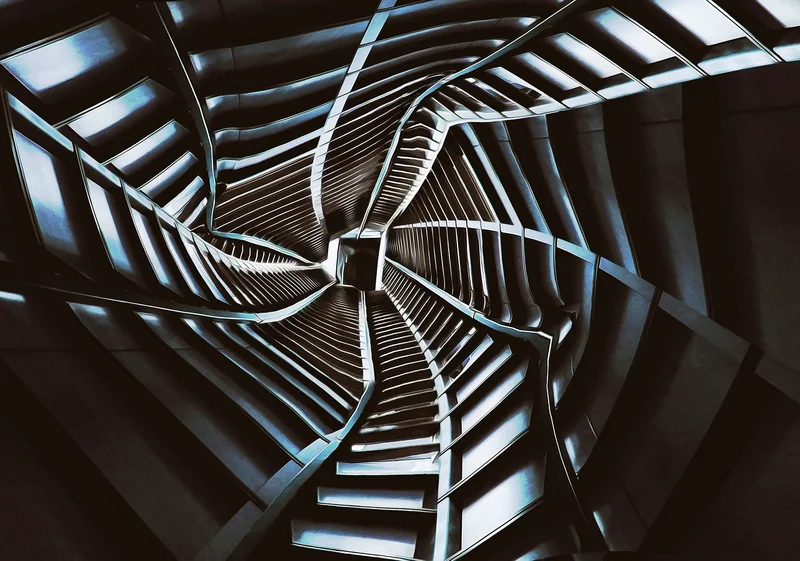
The rubber sheet shows a two-dimensional surface curving into a third dimension. But spacetime curvature doesn't require an extra dimension. The curvature is intrinsic—it's the geometry of the fabric itself bending within its own dimensions. Think of it like this: if you draw a triangle on a flat piece of paper, its angles add up to 180 degrees. Draw the same triangle on the surface of a sphere, and the angles add up to more than 180. That's curvature without needing a "higher dimension."
What the Analogy Gets Right
The rubber sheet does illustrate the core idea beautifully: mass tells spacetime how to curve, and curved spacetime tells mass how to move. The Earth doesn't "pull" the Moon with a force across empty space. The Moon is simply following the straightest possible path through curved spacetime. And because spacetime is curved, that path happens to be an orbit.
I once tried to explain this to a friend over coffee. I drew a grid on a napkin, placed a sugar cube in the middle, and said: "Watch how the grid lines bend." He looked at me like I was insane. But later, he told me it clicked when he imagined himself as a marble rolling past the sugar cube's dent. That's the trick: you have to feel it, not just know it.
Key takeaway: Objects in free fall are following the straightest possible paths in curved spacetime. There is no mysterious force pulling them.
| Newton's View | Einstein's View |
|---|---|
| Gravity is an attractive force between masses | Gravity is the curvature of spacetime caused by mass/energy |
| Force acts instantaneously across distance | Changes in gravity propagate at the speed of light |
| Space and time are separate and absolute | Space and time are unified into flexible spacetime |
| Orbits are caused by a balance of forces | Orbits are free-fall paths through curved spacetime |
Time Dilation: Why Clocks Run Slower Near Massive Objects
This is where relativity stops being abstract and starts being measurable. Time itself runs slower in stronger gravitational fields. It's not a mechanical effect—clocks don't "break" near massive objects. Time, as a dimension, literally stretches.
Here's a concrete example I love: in 1971, physicists Joseph Hafele and Richard Keating flew four atomic clocks around the world on commercial airliners. They compared them to identical clocks that stayed on the ground. The flying clocks—which experienced slightly weaker gravity at altitude—ran faster by about 273 nanoseconds. The prediction from General Relativity? 273 nanoseconds. That's a 0% error in a direct measurement of time dilation.
The GPS Proof
If you've ever used GPS, you've trusted General Relativity with your life. GPS satellites orbit at about 20,200 kilometers altitude, where Earth's gravity is weaker. Their atomic clocks run faster by about 45 microseconds per day compared to clocks on the ground. Without correcting for this relativistic effect, your GPS would accumulate errors of about 11 kilometers per day. Your phone's map app only works because Einstein was right.
Spoiler alert: there's also a Special Relativity effect from the satellites' orbital speed, which slows them down by about 7 microseconds per day. The net correction is about 38 microseconds per day. Every GPS receiver in the world applies this correction. I find it mind-blowing that a theory published in 1915 is hard-coded into the navigation system of every modern car.
Key takeaway: Time dilation is not a philosophical thought experiment. It's a daily, practical correction that makes modern technology work.
Black Holes: Where Spacetime Breaks Down
Black holes are the most extreme prediction of General Relativity. When a massive star collapses under its own gravity, it can compress so much mass into such a small volume that spacetime curvature becomes infinite. The result is a region from which nothing—not even light—can escape.
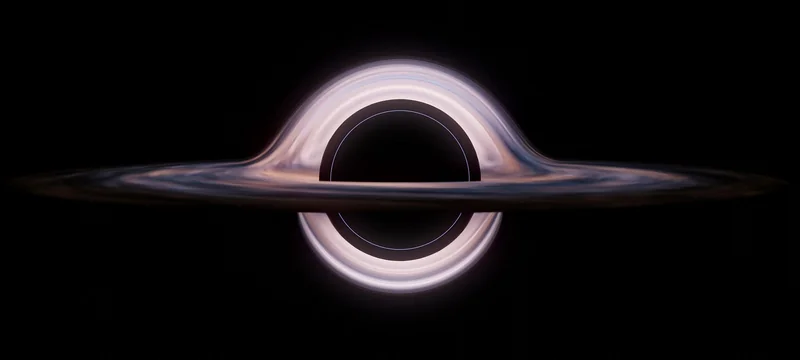
I remember the first time I truly understood the event horizon. It's not a physical surface. It's a point of no return. If you cross it, the spacetime curvature is so extreme that all possible paths lead inward. You can't turn around. You can't even point a flashlight outward. Inside the event horizon, "out" no longer exists as a direction.
What Happens at the Singularity?
The singularity is where our current physics breaks down. At the center of a black hole, General Relativity predicts infinite density and infinite curvature. That's a flag that we're missing something—probably a quantum theory of gravity. But for now, the singularity marks the boundary of what we can describe with Einstein's equations.
In 2019, the Event Horizon Telescope collaboration released the first direct image of a black hole's shadow—the supermassive black hole at the center of galaxy M87. It looked exactly like what Einstein's theory predicted. I sat in my living room watching the press conference, and I'll be honest: I teared up a little. A hundred years after the theory was written, we saw its most dramatic prediction with our own eyes.
Key takeaway: Black holes are not science fiction. They are real, observed objects that represent the ultimate test of General Relativity.
Gravitational Waves: Ripples in the Fabric
If black holes are the extreme static prediction of General Relativity, gravitational waves are the dynamic one. When massive objects accelerate—like two black holes spiraling into each other—they create ripples in spacetime that travel outward at the speed of light. These are literal waves in the fabric of the universe.
Einstein predicted them in 1916, but he wasn't sure they were real. He even published a paper saying they might be an artifact of the math. It took nearly a century to prove him wrong on that doubt.
The LIGO Detection
On September 14, 2015, the Laser Interferometer Gravitational-Wave Observatory (LIGO) detected the first gravitational wave signal—from two black holes merging 1.3 billion light-years away. The wave stretched and squeezed LIGO's 4-kilometer arms by a distance 10,000 times smaller than a proton. That's how sensitive the measurement was. And it matched Einstein's equations perfectly.
Since then, LIGO and Virgo have detected dozens of gravitational wave events. We've heard the universe's soundtrack for the first time. Every chirp and ringdown tells us about black holes and neutron stars we never knew existed.
Key takeaway: Gravitational waves opened a completely new way to observe the universe—not with light, but with the ripples of spacetime itself.
Everyday Relativity: Why Your GPS Depends on Einstein
Let me bring this back down to Earth. You might think General Relativity is irrelevant to your daily life. That's wrong. Every time you use a map app, you're relying on Einstein.
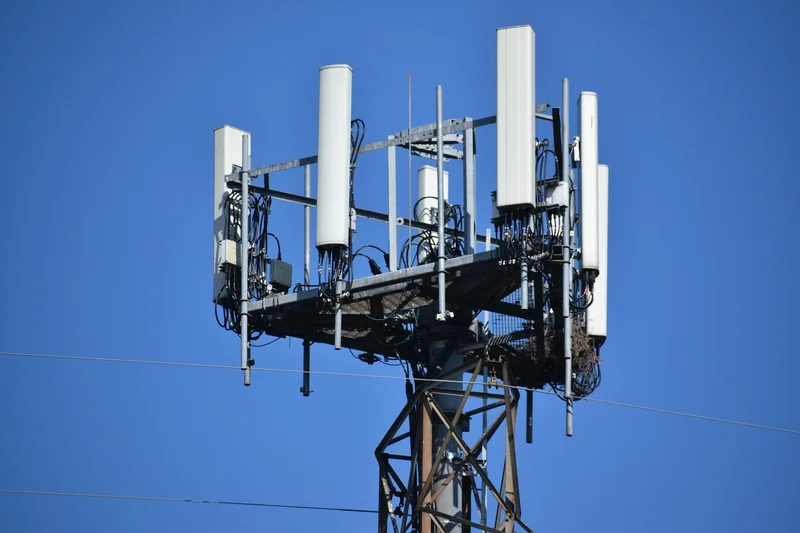
Here's the breakdown:
- Satellite clocks run faster due to weaker gravity (General Relativity).
- Satellite clocks run slower due to their orbital speed (Special Relativity).
- The net correction is about 38 microseconds per day—without it, GPS positions drift by kilometers.
And it's not just GPS. Particle accelerators like the Large Hadron Collider must account for relativistic effects. The magnetic fields that steer particles are calculated using relativistic equations. Even the gold in your jewelry—formed in neutron star mergers—was predicted by General Relativity to be produced in such violent events.
I once gave a talk where someone asked: "So what? Why should I care about a theory that only matters for black holes and GPS?" I told them: "Because without it, you wouldn't know where you are. And without it, we wouldn't know where the gold in your wedding ring came from." That shut them up.
Key takeaway: General Relativity is not a dusty museum piece. It's the operating system of the universe, and we use it every single day.
Why Relativity Matters More Than Ever
So here we are in 2026. We've detected gravitational waves. We've imaged black holes. We've measured time dilation to exquisite precision. General Relativity has passed every test we've thrown at it.
But the story isn't over. We still don't know how to reconcile gravity with quantum mechanics. Dark matter and dark energy remain mysteries that might require modifications to Einstein's theory. The Event Horizon Telescope is now aiming for movies of black holes—actual videos of matter swirling around the event horizon. And new gravitational wave observatories are being planned for space.
Your next action? If you've made it this far, you've already taken the first step. Now go deeper. Watch a lecture by Kip Thorne. Read "The Elegant Universe" by Brian Greene. Or just look up at the night sky and remember: the light from those stars traveled through curved spacetime to reach you. And Einstein figured out how that works with nothing but a pencil, paper, and one of the most brilliant minds in human history.
That's the real takeaway: you don't need to be Einstein to understand his universe. You just need the courage to unlearn what you thought you knew.
Frequently Asked Questions
Does General Relativity mean that time travel is possible?
Not in the way science fiction imagines it. General Relativity does allow for closed timelike curves—paths that loop back on themselves in time—but every known example requires exotic matter with negative energy density, which we've never observed. For practical purposes, you can only travel forward in time (by moving fast or near a black hole), not backward.
Is General Relativity proven?
Yes, to an extraordinary degree. Every prediction—time dilation, gravitational lensing, black holes, gravitational waves—has been confirmed by experiment and observation. The theory has passed every test with no significant deviations, making it one of the most rigorously validated theories in all of science.
What's the difference between Special and General Relativity?
Special Relativity (1905) deals with constant motion and the relationship between space and time. General Relativity (1915) extends this to include acceleration and gravity. In simple terms: Special Relativity says moving clocks run slow; General Relativity says clocks near massive objects also run slow—and it explains why gravity works the way it does.
Can I experience time dilation in my daily life?
Yes, but the effect is tiny. If you live on the top floor of a skyscraper, you age about 0.00000000000001 seconds more per year than someone living at ground level—because gravity is slightly weaker higher up. It's measurable with atomic clocks, but you'll never notice it personally.
Will General Relativity ever be replaced?
Almost certainly. General Relativity breaks down at singularities (black hole centers, the Big Bang). A quantum theory of gravity—like string theory or loop quantum gravity—will likely supersede it in those extreme regimes. But any new theory must reproduce General Relativity's predictions for the situations where we've tested it. Einstein's theory isn't wrong; it's incomplete.